Bologna
In Bologna, a total of 65 epidemic events are known so far. It is a city in Emilia-Romagna, Italy in Italy. The coordinates are 44° 29' 38.04" N, 11° 20' 34.08" E.
Map of Bologna
Table
| Disease | DateStart date of the disease. | SummarySummary of the disease event | OriginalOriginal text | TranslationEnglish translation of the text | ReferenceReference(s) to literature | Reference translationReference(s) to the translation |
|---|---|---|---|---|---|---|
| 1224-00-00-Bologna | 1224 JL | Epidemic and price increase in Bologna | Fu gran carestia, e moria à quest' Anno; il formento valeva lire 3., la Farina soldi 44, il Ducato valeva soldi 30; e facendosi lemosina nel Vescovato il Giovedì Santo la Stretta delli Poveri si affogornon 24. Persone. | There was great famine and starvation in this year; wheat was worth 3 lire, flour 44 lire, the Ducato was worth 30 lire; and there was a famine in the Bishop's Palace on Holy Thursday, and the Stretta dell'Poveri was starved 24 people. | Template:Lodovico Ostesani 897–1506, p. 1224 | Translation by Thomas Wozniak |
| 1225-00-00-Bologna | 1225 JL | Disease in animals and humans in Bologna | Quest' anno fu grande mortalità de homeni, e bestie nell' città e contà de bologna | This year was great mortality of humans, and beasts in the city and contà de Bologna. | Giacomo del Poggio, p. 31 | Translation by Thomas Wozniak |
| 1225-00-00-Bologna-002 | 1225 JL | Disease in animals and humans in Bologna | Tanta eodem tempore et in agro Bononiensi et urbe contagio pestilentiae fuit ut vix credibilia memoratu videantur quae de hominum pecorumque internectorum numero scriptores providere | Achille Bocchi, XIII, p. 2 | Translation needed | |
| 1225-00-00-Bologna-003 | 1225 JL | Cattle disease and (human?) epidemic in Bologna | 1225. Fù oltre la peste d' Italia una [f. 12r] gran mortalità di Buovi | Besides the plague of Italy, there was a great mortality of Cattle. | Chronica Azzolina (1106-1457), pp. 11v-12r | Translation by Thomas Wozniak |
| 1227-00-00-Bologna | 1227 JL | Famine, price increase and high mortality in Bologna | Magna fames fuit in civitate Bononiae et per diversas partes et valuit corba frumenti tres libras et fabarum xlviij soldos, speltae soldos xxxiiij et melegae xxviij soldos [...] Fuit magna mortalitas tam in divitibus, quam in pauperibus personis | There was a great famine in the city of Bologna and in different areas and wheat was 3 pound and fabarum 48 Solidi, speltae 34 Solidi and melegae 33 Solidi. [...] Because of a great mortality a lot of poor people died. | Template:Griffoni 1902, p. 9 | Translation needed |
| 1227-00-00-Bologna 002 | 1227 JL | Famine, epidemic and price increase in Bologna; Contado hit even worse; deserted village; Bishop's alms end in mass panic with deaths | In questo anno vi fu una gran carestia in Bologna, come ancora da crudelissima peste, in maniera che molti dei nobili nella città morirono, ma nel contado infiniti perirono; percioche le Castella entire andarono in esterminio [...] in questa penuria in Bologna valse lo staio dell' grano tre lire, la fava soldi vintiotto, la spelta soldi quatordici, et la mollidura soldi quindici, et il duccato d'oro si spendeva per soldi [1]30. Il che mosse il Vescovo della Città il Giovedi Santo a invitare tutti i puoveri a pigliare per carità il pane dove concorse tanta multitudine che ventiquattro per la folta turba morirono: perche ciaschun bramava d'essere il primo, essendo dalla fame. | In this year there was a great famine in Bologna, as there was also a cruel plague, so that many of the nobles in the city died, but countless perished in the countryside; therefore the entire Castella went into extermination [...] in this scarcity in Bologna, the staio dell' grano was worth three lire, the fava bean was worth eight hundred soldi, the spelt fourteen soldi, and the mollidura fifteen soldi, and the dukedom of gold was spent for money 130. This moved the Bishop of the City on Holy Thursday to invite all the people to take bread for charity, where so great a multitude gathered that twenty-four died because of the large crowd: because each one yearned to be the first, being from hunger. | Template:Anonymus, p. 82 | Translation by DeepL |
| 1227-00-00-Bologna 003 | 1227 JL | Famine, price increase and high mortality in Bologna. | Per Bologna et per tutta Italia quest' anno fu grande carestia, et valeva la corba del formento lire tre, intravene che la giobia santa facendosi l'ellemosian al vescovado, gli fu tanta la calcha che gli ne mor circa 20. E fu grande mortalità quest' anno per la cita e morireno molti gentilhomini. | For Bologna and all of Italy, this year was a great famine, and the forage was worth three lire, when the holy jewel was made to the bishopric, there was so much heat that about 20 died. And it was a great mortality this year for the citation and many gentlemen died. | Template:Giacomo del Poggio, p. 34r. | None |
| 1229-00-00-Bologna | 1229 JL | Epidemic and price increase in Bologna | e fo una grande carastia valse la grano L 3 la coraba, la fava L. 2 ß 8, la spelta L 1 ß 14 e la melega valse ß 28. Nel dito ano fu una grandi moria impur asai paesi | Template:Giacomo Ronco, p. 304v | Translation needed | |
| 1259-04-00-Borgo San Donino | April 1259 JL | Great mortality in Italy, for example in Bologna, Borgo San Donino, Milan and Florence. | Item eodem anno [1259] in Ytalia maxima fuit mortalitas mulierum et hominum, ita quod in vespertino offitio duos mortuos simul in ecclesia habebamus. Et inchoavit ista maledictio in ebdomada de passione, ita quod in tota provincia Bononie fratres Minores offitium in dominica olivarum dicere non potuerunt, ita erant a quodam frigore lesi; et pluribus mensibus duravit infirmitas ista. Tunc obiit domnus Rubinus de Soragna, barbanus Uberti Pelavicini et frater Marchispoli, quem in confessione audivi. Item in Burgo Sancti Donini ex illa pestilentia mortui sunt trecenti et eo amplius, et in Mediolano multa milia, et in Florentia similiter multa milia; nec pulsabant campanas, ne infirmos terrerent | In the same year (1259) in Italy, there was a great mortality among women and men, such that during Vespers, we had two dead bodies at the same time in the church. This curse began in Passion Week, to the point that in the entire province of Bologna, the Friars Minor could not recite the office on Palm Sunday, as they were afflicted by a certain chill; and this illness lasted for several months. At that time, Lord Rubinus de Soragna, uncle of Uberto Pelavicini, and Brother Marchispoli, whom I heard in confession, passed away. Likewise, in the town of Borgo San Donnino, more than three hundred people died from that pestilence, and in Milan many thousands, and similarly many thousands in Florence; the bells were not rung, so as not to frighten the sick. | Template:Salimbene De Adam 1998/99, Vol. 2, pp. 674-675. | Translation by Martin Bauch |
| 1259-04-00-Italy | April 1259 JL | Epidemic and high mortality in Italy. | Et eodem anno MCCLIX magna fuit mortalitas, et composui librum de tediis. [...] In supradicto millesimo habitabam in Burgo Sancti Donini et composui et scripsi alium librum Tediorum ad similitudinem Pateccli. Item eodem anno in Ytalia maxima fuit mortalitas mulierum et hominum, ita quod in vespertino offitio duos mortuos simul in ecclesia habebamus. Et inchoavit ista maledictio in ebdomada de Passione, ita quod in tota provincia Bononie fratres Minores offitium in Dominica Olivarum dicere non potuerunt, ita erant a quodam frigore lesi; et pluribus mensibus duravit infirmitas ista. Tunc obiit dominus Rubinus de Soragna, barbánus Uberti Pelavicini et frater Marchisopoli, quem in confessione audivi. Item in Burgo Sancti Donini ex illa pestilentia mortui sunt trecenti et eo amplius, et in Mediolano multa milia, et in Florentia similiter multa milia; nec pulsabant campanas, ne infirmos terrerent. | And in the same year 1259, there was a great mortality, and I composed a book about weariness. [...] In the aforementioned year, I lived in San Donino and composed and wrote another book of weariness, similar to Gherardo Patecchio. Also in the same year, in Italy, there was a great mortality of men and women, so much so that during the evening office, we had two dead in the church at the same time. And this curse began in the week of Passion, so that in the whole province of Bologna, the Friars Minor could not perform the office on Palm Sunday, as they were affected by a certain chill; and this illness lasted for several months. Then, Master Rubinus of Soragna, the barber of Uberti Pelavicini, and Brother Marchisopoli, whom I heard in confession, died. Also in San Donino, more than three hundred died from that pestilence, and in Milan, many thousands, and similarly in Florence, many thousands; and the bells did not toll, lest they terrify the sick. | Template:Salimbene De Adam 1966, pp. 674–675. | Translation by Martin Bauch |
| 1260-00-00-Bologna | 1260 JL | Epidemic in connection with the flagellants. | Nell' Anno 1260 seguiura una attrocissima mortalita, che li sette ottavi delle Persone occissi alla sua falce, molte Cittade rimasero disabitate e fù al tempo del B. Riniero dove fù necessario per placare l' ira di Dio, che le persone andassero in Processione nudi insino alla centura disciplinandosi. | In the year 1260 there followed a very terrible death, so that the seven eighths of the people came to his sickle, many cities were left uninhabited and it was at the time of B. Riniero where it was necessary to appease the wrath of God, that the people went in procession naked to the centurion, disciplining themselves. | Template:Giacomo dal Gambaro, p. 182r. | Translation by DeepL |
| 1260-00-00-Bologna 002 | 1260 JL | Flagellants in context of famine and epidemic | In questo tempo essendo molestata grandemente la Italia de la fame et de la Peste, hebbero principio le Confraternita, o come si chiamano a Bologna le compagnie dei Battuti | At this time, when Italy was greatly afflicted by famine and plague, the Confraternities, or as they are called in Bologna, the Companies of the Battuti, began. | Template:Pompeo Vizzani, p. 182r | Translation by DeepL |
| 1280-00-00-Bologna | 25 January 1280 JL | Many apocalyptic events in Bologna, like on 25. January an earthquake and solar eclipse; Two months of rain, floods and consequently a famine and Epidemic with many deaths | L'anno 1280 all 25 di Gennaro in Bologna fu un gran terremoto et nell' hora di non si ecclisÒ il Sole et stete oscurato per lo spatio di due hore, et finito il detto ecclise appareve la luna di color negro, et fù veduto un Dragone per l'aria con la coda lunga volare; et la brina che poco dopo cade fecce seccare le viti, et le scemenze et in quello istesso tempo cominciorno le pioggie che durrono per due mesi continui, facendo l'aque dei fiumi grandissimi danni, et gettando a terra molti ponti percio ne segui la carestia et la Peste che gran numero di gente levò di vita | In the year 1280, on the 25th of January in Bologna, there was a great earthquake, and at the hour of noon the Sun was eclipsed and darkened for the space of two hours, and when the said eclipse was over, the moon appeared black in colour, and a dragon was seen flying through the air with its long tail; And the frost that shortly afterwards fell dried up the vines, and the fruit, and at the same time the rains began, which lasted for two continuous months, doing great damage to the waters of the rivers, and throwing many bridges to the ground, so famine and the Plague followed, which took a great number of people from life. | Template:Anonymus, p. 140 | Translation by DeepL |
| 1288-00-00-Bologna | 1288 JL | Encouragement of marriages by the municipality of Bologna; fear of epidemics because of the weather, therefore banishment of lepers from the city to a hospital and financial aid for the poor. | Costumava in questi tempi il Senato di honorare e favorire li Matrimonij che fra li Cittadini si facevano dentro la Città, et in questo medesimo anno se ne feccero quarantuno Matrimonij nel quale lassendolo il Senato fece fare altre tante casselline di panno rosato, et a ciaschuhno secondo era il [S. 150] ne presentò una. Era questo favore di tanta stima che lo spos gloriandosi per otto giorni continui portava in capo la detta cappellina di Rosato. Et da li in poi lo spos la serbava in casa come segno di particolar favore fattogli dal Senato. In questo medesimo anno volle il Senato che si fabricasse un ponte vicino alla città per cui passa l'aqua del Fium Savena. Et perche pareva che l'aere et le gravi infermità minacciassero qualche disordine ne' corpi humani morendo gli' Infermi quasi di repentina morte fù dal senato fatto quest' ordine che nessun Leproso o contaminato nella persona habitasse, ne si accortasse alla Città per ispatio di re miglia, ma si fermasse all' Hospital di S. Lazzaro. Et se alcuno di detti infettati fosse povero, il Senato darebbe per ciascuno povero lire dieci. | It was the custom in these times for the Senate to honour and favour the marriages of citizens within the city, and in this same year forty-one marriages took place, in which the Senate had many other rosy-coloured boxes made, and to each one, according to the [S. 150] order, it presented one. This favour was of such esteem that the bride gloriously wore for eight continuous days the said chapel of Rosato on her head. And from then on, the bride kept it at home as a sign of the special favour done him by the Senate. In the same year, the Senate demanded that a bridge be built near the city through which the waters of the river Savena flow. And because it seemed that the air and the serious infirmities threatened some disorder in the human body, with the infirm dying an almost sudden death, the Senate ordered that no lepers or those infected in person should live in the city, nor should they be seen by the city for a distance of three miles, but that they should stay at the Hospital of S. Lazzaro. And if any of the infected were poor, the Senate would give each poor person ten lire. | Template:Anonymus, pp. 149–150. | Translation by DeepL |
| 1307-00-00-Bologna | July 1307 JL | Miracle cure through S. Petronio | Nel detto Anno, esendo multi Infermi et Amaladi, bevevano et lavavasi de laqua del Pozo de San Petronio, in San Stefano, e liberarsi tutti da diverse infirmitade | In the aforementioned year, when there were many infirm and amaleurs, they drank and washed themselves with the water from the Pozo de San Petronio, in San Stefano, and freed themselves from various infirmities | Template:Fragmenti di storia Bolognese, p. 129 | Translation by DeepL |
| 1307-07-00-Bologna | July 1307 JL | Healing of fever illnesses in Bologna. | In quest' anno del mese di Luglio et Agosto [f. 192v] furono in Bologna grandi Infermita, e quelli che bevettero con divotione dell' Acqua del Pozzo di S. Pietro, che è di dietro il Sepolcro di San Stefano, sentirono gran giuvamenti e molti della febre furono liberati | In this year, in the month of July and August, there were great epidemics in Bologna, and those who drank with devotion of the water from the Well of St. Peter, which is behind the Sepulchre of St. Stephen, felt great joy and many were freed from the fever. | Template:Anonymus 1586, p. 192r-v. | Translation by Thomas Wozniak |
| 1307-07-00-Bologna 002 | 1307 JL | Healing of fever patients in Bologna | Molti Infermi di diverse infirmità andon in s. Stefano a quello Pozo se fece san Petronio, e bevevano di quella aquacon divotione et tutti furono liberati dele lor infirmita | Many sick people of various diseases went to St. Stephen's to that fountain of St. Petronius, and drank of that water with devotion and all were freed of their sicknesses | Template:Memorie della Città di Bologna, p. 73v | Translation by Thomas Wozniak |
| 1312-00-00-Bologna | 1312 JL | Price increase and epidemic in Bologna. | Die quest' anno fu una gran mortalità sconosciuta dalli medici, fu similmente una grandissima carestia si di pane, come di vino, et aceto, che il fromento si vende sol. [f. 21v] di venti la Corba, che prima si vende una cinque, et il vino, et l'aceto 40 bolognini. | In this year there was a great mortality unknown to the doctors, there was likewise a great famine both of bread and of wine and vinegar, so that the fromento was sold for only. [f. 21v] of twenty la Corba, which was previously sold at five, and the wine, and vinegar 40 bolognini. | Template:Chronica Azzolina (1106-1457), p. 24 | Translation by DeepL |
| 1312-06-00-Bologna | June 1312 JL | Price increase and high mortality in Bologna | Eo anno fuit karitudo magna panis et vini tempore estivo et mortalitas magna gencium ubicumque; et multi de Bononia obierunt, et medici non bene cognoserunt malum eorum. Item de mense iunii desendit furmentum et valuit xx soldos quod parum ante valebat lv soldos bon., et valuit illo anno acetum et vinum xl soldos et ultra. | Cronaca Villola (-1350), p. 324 | Translation needed | |
| 1319-00-00-Bologna | 1319 JL | Epidemic | Al tempo della mortalità morì Folco Lombardi da Lucca e sepolto in S. | At the time of his mortality, Folco Lombardi of Lucca died and was buried in S. | Diario estratto dallo studio dell’ Alidosio, p. 35r | Translation by DeepL |
| 1346-00-00-Bologna | 1346 JL | Epidemic in Bologna | Fu gran peste in Bologna, e morirno più di 4000 persone, fra quali morì Ms. Jacomo Bottivigari, Dottore di legge, Ms. Mraion da S. Marino Cavaliere, Salvadio Delfino, Bibozo Sava Medico. | There was a great plague in Bologna, and more than 4,000 people died, including Ms. Jacomo Bottivigari, Doctor of Law, Ms. Mraion da S. Marino Cavaliere, Salvadio Delfino, Bibozo Sava Medico. | Diario estratto dallo studio dell’ Alidosio, pp. 47r | Translation by DeepL |
| 1347-00-00-Bologna | 1347 JL | Price increase, famine deaths and rural exodus throughout Europe, but also in Bologna | In questo anno fuo la magiore charestia che se recordi mai huomo alcuno; e del mese de zenaro muntò el formento a soldi 40 la corbe, e del mese de marzo muntò a lire 3 la corbe, e del mese d' aprile muntò a lire 3 soldi x la corbe e stete così infino a recolto. Et trovandosse molto buono racolto de formento, onde per la festa de santo Pietro callò el dito formento in ii sabadi a soldi xx per la corbe, e valse a Fiorenza iii fiorin la corbe, e male se ne posseva avere per li dinari, e molte persone schiosaron per la presia alla chà dal merchado dove se vendeva el formento. Et fuo generale carestia e fame per tuta cristianitade. I contadini veneron a la citade, e per la fame chaschavano per le contrade: grande mortalitatde fuo. Et one domane venìa alle ghiexia grande [S. 564] molte fameie de poveri per avere lemosina, chè continuo ne davano hone domane; fra li quali poveri vedivi morire molti gioveni e puti che murivano de fame in braze alle madre loro, e una grande schiuma li vegnia a la bocha; e questo vidi io scritore in Santo Iacomo di frti Romitani, la quale cosa era una grandissima compassione a vedere | In this year it was the greatest store that any man has ever recorded; and in the month of January he collected fodder at 40 lire, and in the month of March he collected it at 3 lire, and in the month of April he collected it at 3 lire, and stayed like that until the end of the year. And he found a very good harvest of fodder, so that on the feast of Saint Peter he called for fodder on the second Saturday at 20 lire per crown, and it was worth 3 Florins per crown in Florentine, and it was hard to get enough for the money, and many people went to the market where the fodder was sold. And there was general famine and starvation throughout Christendom. The peasants came to the city, and because of hunger, they went out into the countryside: there was great mortality. And one Sunday many families of the poor came to the great guiexia [S. 564] to have lemosina, since they were continually giving them money on Sundays; among the poor you could see many young men and women dying of hunger in the arms of their mothers, and a great froth came to their mouths; and this I saw in Santo Jacomo of the Romitani friars, which was a great pity to see. | Anonymus 1938c, pp. 563-564 | Translation by DeepL |
| 1347-00-00-Bologna 002 | 1347 JL | Price increase in Bologna and intervention of the Signor, no more enforcement of debt claims | In Bologna cominciò una grande carestia, et nelle circostantie, et in Bologna valeva lire 3 di bolognini [S. 6r] la Corba il fromento che mai più ianzi er valuto tanto et La Corba della fava soldi 50. onde il Signore Tadeo a conservatione et bene della Città quanto per a fece bandire, che nell' una persona potesse essere voletto per aleva debito in qualung caso si fosse per inizio al mese d'Agosto prossimo, et fù di Marzo questa provissione et subito fecero condurre il detto Signore. Tadeo in Bologna circa corbe 100 M. di fromen%to e custolli molto caro, et lo diede per soldi 36 la Corba di che fu molto amato dal Populo di Bologna [...] In Bologna persevarò la carestia in tal modo, che del mese di Giugno valeva la corba del fromento soldi 70 de bolognini; per la quale cosa venne una mortalità grande del che morì molta gente, et morirono gli infrascritti notabili gentil huomini [...] | Template:TN | Diario di cose seguite in Bologna (1345-1380), p. 5v–6r | None |
| 1347-00-00-Bologna 003 | 1347 JL | Price increase, famine deaths and epidemic in Bologna and grain imports of the city | In questo millesimo et anno si fu in queste parte una grande carestia, et qui in Bologna valse la corba del formento lire tre de bolognini; et li nostri signori ne feno venire del formento oltra che cento millia corbe, che'l comparono molto charo et si el feno dare per soldi 36 la corba [...] In lo dicto millesimo si fu in Bologna una grande mortalità et grande fame, chè valse la corba del formento lire tre, soldi x la corba; et morireno in Bologna per la dicta morìa de multi boni homini, tra li quali ce morirono quisti, zoè (List of socially high ranking citizens, scholars and nobles) | In this thousandth and year there was a great famine in these parts, and here in Bologna the forage was worth three lire, three coins; and our lords made the forage come more than one hundred thousand coins, which seem very cheap, and they gave it for 36 coins [... ] In the said thousandth year there was in Bologna a great mortality and great hunger, which made the forage worth three lire, money x the corba; and many good men died in Bologna because of the said death, among whom these died, namely (List of socially high-ranking citizens, scholars and nobles). | Anonymus 1938a, p. 565 | Translation by DeepL |
| 1347-00-00-Bologna 004 | 1347 JL | High mortality, famine and price increase in Bologna | In lo ditto imllesimo fo in Bononia una grande mortalega e de multi boni homini, e fame, che 'l ce valse la corbe del formento libre iii e soldi x. | In the aforementioned year there was a great death in Bologna of many good men, and hunger, which earned us forage in pounds 3 and soldi 10 | Anonymus 1938a, p. 567 | Translation by DeepL |
| 1347-00-00-Bologna 005 | 1347 JL | Massive price increase, many deaths and epidemics in Bologna | In questo anno 1347 fu la mazora charastia che se arechordasse mai homo lchuno che fuse vivo al prexento et fu generalmente per tuta la christianita. Et del mexo di zenaro munto el formento a ß 40 la chorbe e del mexo di marzo munto a ß 60 la chorbe e del mexo d' aprile munto a ß 70 la chorbe et stete quossi per persino al recholto. Vedendo tal quosa el nostro S[ignore] M[esser] Tadio di Pepoli di tanta charastia ne feze venire per Bologna circha 50 milia chorbe che chomparo per diversi luchi molto charo per tenire la tera abondante et fe valo dare a quili da Bologna per ß 40 la chorbe. E questo feva per fare abondanzia al suo populo di bologna et ne perisse assai per che [stavua per morir che lino] li veniva e queste per far abondanzia al suo populo di Bologna et esendo venuto el recholto fu uno bono recholto e formento unde per la festa di santo [petronio] chalo el dito formento in tri sabati [cueve] a ß 20 la chorbe e valse la chorbe a fiorenza tri fiorini e malo se ne poseva avere per i 60 [soi] dinari e molte persone se afochorno per la pressia a la cha drimenchato donde se vendeva el formento. e questa tal charistia et famre super tuta christianita i chontadini venivano a la citade e per la fame chadevano per la chontea morti et vedovassi tanti poveri andare cerchanodo limoxena et alchuna volta non atrovavano limoxena chadevano morti per la fame. Et in frian di ubaldi schivando questa partida di suxo una latra chronicha el scriptore che avea schripto quela chronica disse di avere veduto chon li ochi soi morire alchuni pote di fame in braza a le madre e quando erano morti aveano la schiuma a la bocha et era una ghrandisima schurita | Template:TN | Friano Ubaldini 1378, p. 278r | None |
| 1347-00-00-Bologna 006 | 1347 JL | Epidemics in Bologna. | In questo anno 1347 fu in Bologna una ghrandisima mortalita et mori per Bologna per la dita moria di molti boni homini fra li quai li morti quisti zoe [...] et molti altri assai morino di questa moria ma quisti nominati furno deli principali di Bologna. | In this year 1347 there was in Bologna a great mortality and many good men died in Bologna, among whom these two died [...] and many others died as a result of this death, but those named were the principal ones of Bologna . | Friano Ubaldini 1378, p. 279r. | Translation by DeepL |
| 1347-00-00-Bologna 007 | 1347 JL | Famine and epidemic in Bologna with more than 4'000 deaths, also deaths from the upper class (with names). | Fò in Bologna tanta fame, e mortalità, che ne morì più di 4000 persone pizoli e grandi, e assai poveri caschavano de fame per le strade, e molti assai vecchi morivano de fame, perche non posseano avere del Pane per li suoi dinari a benchè molti assai ricchi, è questi sono li capi de li homini che morino di fame, e li nomi soi sono scritti quie de sotta, e prima: Misser Jacomo di Butrigiani Donore di lege. Misser Rainiero Samaritani Chavaliero. El Salvatico Dalfino da Loiano. Misser Bertuzo Soprano Medico. Mattiuzo Bianchetto di Bianchitti. Misser Bornino di Pepoli. Misser Marchium degl' Azigreidi. Misser Lippo di Pepoli. misser Azo di Romagno Dottore. Misser Piero di Bonpieri Dottore. | There was so much hunger and death in Bologna, that more than 4000 people died, both young and old, and many poor people were starving in the streets, and many very old people were starving, because they could not get bread for their money, although many were very rich, and these are the heads of the people who died of hunger, and their names are written here underneath, and before: Misser Jacomo di Butrigiani Donore di lege. Misser Rainiero Samaritani Chavaliero. El Salvatico Dalfino da Loiano. Misser Bertuzo Soprano Medico. Mattiuzo Bianchetto di Bianchitti. Misser Bornino di Pepoli. Misser Marchium degl'Azigreidi. Misser Lippo di Pepoli. Misser Azo di Romagno Dottore. Misser Piero di Bonpieri Dottore. | Pietro Fabio 1359–1424, p. 52 | Translation by DeepL |
| 1347-00-00-Florence | May 1347 JL | Epidemic follows famine in Florence, 4000 dead (mainly women and children); particularly bad in Romagna, Provence, Bologna, Vignone, Pistoia and Prato. The mortality was foretold by astrologers. | Di grande mortalità che ffu in Firenze, ma più grande altrove, come diremo apresso Nel detto anno e tempo, come sempre pare che segua dopo la carestia e fame, si cominciò in Firenze e nel contado infermeria, e apresso mortalità di genti, e spezialmente in femine e fanciulli, il più in poveri genti, e durò fino al novembre vegnente MCCCXLVII ma però non fu così grande, come fu la mortalità dell'anno MCCCXL come adietro facemmo menzione; ma albitrando al grosso, ch'altrimenti non si può sapere a punto in tanta città come Firenze, ma in di grosso si stimò che morissono in questo tempo più di IIIIm persone, tra uomini e più femmine e fanciulli; morirono bene de' XX l'uno; e fecesi comandamento per lo Comune che niuno morto si dovesse bandire, né sonare campane alle chiese, ove i morti si sotterravano, perchè lla gente non isbigotisse d'udire di tanti morti. E lla detta mortalità fu predetta dinanzi per maestri di strologia, dicendo che quando fu il sostizio vernale, cioè quando il sole entrò nel principio dell'Ariete del mese di marzo passato, l'ascendente che ffu nel detto sostizio fu il segno della Vergine, e 'l suo signore, cioè il pianeto di Mercurio, si trovò nel segno dell'Ariete nella ottava casa, ch'è casa che significa morte; e se non che il pianeto di Giove, ch'è fortunato e di vita, si ritrovò col detto Mercurio nella detta casa e segno, la mortalità sarebbe stata infinita, se fosse piaciuto a dDio. Ma nnoi dovemo credere e avere per certo che Idio promette le dette pestilenze e ll'altre a' popoli, cittadi e paesi [p. 486] per pulizione de'peccati e non solamente per corsi di stelle, ma tolera, siccome signore dell'universo e del corso del celesto, come gli piace; e quando vuole, fa accordare il corso delle stelle al suo giudicio; e questo basti in questa parte e d'intorno a Firenze del detto delli astrolagi. La detta mortalità fu maggiore in Pistoia e Prato e nelle nostre circustanze all'avenante della gente di Firenze, e maggiore in Bologna e in Romagna, e maggiore in Vignone e in Proenza ov'era la corte del papa, e per tutto il reame di Francia. | Of a great mortality which occurred in Florence, although it was greater elsewhere, as we will recount. In this year and season, as seemingly always after food shortages and famines, a sickness began in the city and countryside of Florence. Soon people began to die, especially women and children, and the most among the poor. It lasted until November 1347, but it was not as great as the mortality of 1340 that we described earlier. If we make a rough guess—it is impossible to do otherwise in a city as great as Florence—it seems that this time more than four thousand people died, men and more women and children. More than one in twenty died. It was ordered by the commune that no death be announced and no church bell be sounded during burials, lest people be terrified to hear of so many deaths. This mortality was foretold by master astrologers who stated that during the vernal solstice—that is when the sun entered the sign of Aries last March—the sign of Virgo was rising and Virgo’s ruler Mercury was in the eighth house of Aries, a house signifying death. And were it not for the fact that Jupiter, which brings fortune and life, accompanied Mercury in this house and sign, the mortality would have been endless—if this had pleased God. But we should believe and be certain that the Lord God promises the said pestilences and others to peoples, cities, and lands to cleanse their sins, and [that he does so] not only through the movement of the stars but sometimes—as Lord of the universe and celestial motion—according to his will. And when he wishes, he matches the movement of the stars to his judgment. Let this suffice regarding Florence, its surroundings, and the sayings of astrologers. This mortality was greater in Pistoia and Prato and in the surrounding territories nearer to Florence; it was greater in Bologna and in Romagna; it was greater at Avignon and in Provence, where the papal court was, and throughout the kingdom of France. | Template:Giovanni Villani 1990, vol. 3, pp. 485–486. | None |
| 1347-00-00-Lombardy | 1347 JL | Cold weather followed by famine. Then outbreak of the Black Death in parts of Lombardy, especially in rural areas, but also in Varese; plague spares Milan, Novara, Pavia, Cuneo and Vercelli. Source is notorious for confused, imprecise and contradictory chronology<a href="#cite_note-1">[1]</a> | Dixeram supra quod tunc temporis nix erat magna et fuit verum; nam duravit super facie terre usque ad finem raensis martii vel quasi, propter quam campestria tantum fastidium frigoris et undacionis susceperunt quod biada, nive recedente, ut plurimum mortua aparebant. Ex qua multe terre habitatoribus private fuerunt, maxime in montanis partibus; deinde, fame cessante, cepit morbus prosiliens a partibus ul'tramarinis partes inferiores invadere; et primo Bononiam applicuit, videlicet anno MCCCXLIIII, in qua civitate infiniti perierunt, omni defensione et medela destituta. Due partes autem corporum dicebantur periisse. Invasitque pestilencia Januam ubi simili modo perierunt; invasit Parmam in qua multi defecerunt. Servavit Mediolanum, Papiam, Novariam, Cumas, Vercellas, set discurrando occupavit Lombardiam a dicto anno usque annum MCCCXLVII, ubi iterum super districtu Novarie vigebat; nam in dicto districtu Momum vacuavit, Bellanzagum similiter et in Burgomanerio ', ubi conversationem habebam, ubi dicti viri belligeri habitabant, perlerunt dieta clade in tribus mensibus prò completis centenaria xxvii virorum, computatis mulieribus et parvulis, nec in aliìs terris tunc insilivit novariensibus; in comitatu autem Mediolani in partibus Varixii, Anglerie, Gallarate et circumstanciis ut supra, sine numero perierunt. Cessavit itaque dieta pestilentìa moriendi, tamen in aliquibus locis discurrendo. | I mentioned above that at that time there was a great snowfall, and it was true; for it lasted on the surface of the earth until the end of March or nearly so. Because of this, the fields suffered so much from the cold and flooding that, when the snow melted, most of the crops appeared dead. As a result, many lands were deprived of their inhabitants, especially in the mountainous regions. Then, as the famine ceased, a disease began to spread from the overseas regions, invading the lower areas. It first struck Bologna in the year 1344 (sic!), where countless people perished, lacking any defense or remedy. It was said that two-thirds of the population died. The pestilence then invaded Genoa, where many similarly perished, and then Parma, where many died as well. Milan, Pavia, Novara, Como, and Vercelli were spared, but the disease spread throughout Lombardy from that year until 1347 (sic!), when it again raged in the district of Novara. In that district, it emptied Momeliano, Bellinzona, and Borgomanero, where I lived, and where the mentioned warriors lived. In three months, 2,700 men perished, including women and children, and the disease did not attack other lands in Novara at that time. However, in the surroundings of Milan, in the regions of Varese, Angera, Gallarate, and the surrounding areas, countless people perished. Thus, the aforementioned pestilence ceased in its deadliness, though it continued to spread in some places | Cognasso 1926-39, p. 53. | Translation by Martin Bauch |
| 1347-05-00-Bologna | May 1347 JL | Mortality in Bologna, Brescia, Milan and Florence, 10.000 deaths over several months | Dicto anno fuit magna mortalitas personarum maxime in civitate Bononiae, et [mortui sunt] de maioribus et melioribus personis ipsius civitatis ultra decem milia personarum et duravit dicta mortalitas a mense maii usque ad mensem septembris; et similiter fuit dicta mortalitas in civitate Mediolani, Brixiae et Florentiae. | In the same year, there was a great mortality of people, especially in the city of Bologna, and over ten thousand of the most prominent and best citizens of that city died. This mortality lasted from the month of May until the month of September. Similarly, there was said to be a great mortality in the cities of Milan, Brescia, and Florence | Giovanni da Bazzano - Chronicon Mutinense 1917, p. 135 | Translation by Martin Bauch |
| 1348-00-00-Avignon01 | 1348 JL | Arivval of the Black Death in many cities and regions of Southern France and Italy and consequences like changing burial habits, collapsing social bonds and abandoned settlements. | Eodem anno (1348) in Avinione, Marsilia, Monte Pessulano, urbibus Provincie, immo per totam Provinciam, Vasconiam, Franciam per omnemque mediterranei maris oram usque in Ytaliam et per urbes Ytalie quam plurimas, puta Bononiam, Ravennam, Venetias, Januam, Pisas, Lucam, Romam, Neapolim, Messanam et urbes ceteras epydimia tam ingens, atrox et seva violenter incanduit, quod in nullo dispar sexu, in etate nulla dissimilis, masculos et feminas, senes et juvenes, plebem et nobiles, pauperes, divites et potentes, precipue tamen plebem et laycos generali fedaque tabe delevit. Interimque lues oborta populum conripuit et depopulata est, ut in plerisque locis ministri sepeliendorum funerum primum multitudine cadaverum gravarentur, post difficulter invenirentur, post non sufficerent, et tandem penitus non essent. Jam etiam magne domus et parve per totas urbes, immo et urbes quam plures vivis hominibus vacue remanserunt et mortuis plene. In urbibus et domibus et campis et locis aliis opes et possessiones copiosissime, sed nulli penitus possessores. Denique tam sevi tabescentium etiam sub tectis et in stratis suis cadaverum putores exalabant, quod non solum in urbibus ipsis vivendi, sed etiam ad ipsas terras et urbes appropinquandi per duo milia passuum non erat facultas hominibus, nis inficerentur, subito (p. 274) corriperentur, post triduum morerentur, et jam nec sepilrentur. Et, ut paucis expediam, tam ingens, tam pestifer ignis epydimalis conflagravit, ut non, quantum hominum in partibus illis absumpserit, sed quantum reliquerit, inquirendum videatur. Vir uxorem et uxor virum, mater filiam et illa matrem, pater filium et e converso, frater sororem et illa fratrum et sororem, et postremo quilibet quemlibet amicum tabescere incipientem contagionis timore reliquit. | In the same year (1348), in Avignon, Marseille, Montpellier, the cities of Provence, indeed throughout entire Provence, Gascony, France, along every coast of the Mediterranean Sea up to Italy, and through many cities of Italy, such as Bologna, Ravenna, Venice, Genoa, Pisa, Lucca, Rome, Naples, Messina, and countless other cities, an epidemic so immense, fierce, and cruelly violent broke out that it spared no one of any sex, age, neither male nor female, nor exempt from any age group, afflicting men and women, old and young, commoners and nobles, the poor, the rich, and the powerful, especially the common people and laypersons, with a general and foul contagion. Meanwhile, the plague that had arisen seized the people and laid waste to them, so that in many places those responsible for burying the dead were first overwhelmed by the multitude of corpses, then one struggled to find them, later there were insufficient of them, and finally they couldn't be found at all. Now, both large and small houses throughout the cities, indeed, even many cities, were left empty of living people and full of the dead. In the cities, houses, fields, and other places, riches and possessions were abundant, but there were no owners anywhere. Finally, such a severe contagion of those wasting away caused the stench of corpses to waft even under roofs and in their beds, such that not only was there no opportunity for people to live in the cities themselves, but even approaching the lands and cities within a distance of two miles was impossible for people, unless they got infected, suddenly seized (p. 274) and died after three days. They were no longer buried. And, to summarize briefly, such a great, such a deadly epidemic fire raged that it seems not only necessary to investigate how many people it consumed in those regions, but how many it left behind. A husband abandoned his wife, and a wife her husband; a mother her daughter, and she her mother; a father his son, and vice versa; a brother his sister, and she her brothers and sisters; and, finally, everyone abandoned anyone at the first sign of the disease's spreading out of fear of contagion. | Heinrich von Herford 1859, pp. 273-274. | Translation by Martin Bauch |
| 1348-00-00-Bologna | May 1348 JL | Black Death in Bologna | Maxima et inaudita mortalitas fuit Bononiae, quae vocata fuit et semper vocabitur la mortalega grande, quia numquam fuit aliqua similis. Et incoepit de mense maji et duravit per totum annum et fere fuit per totum mundum et tam magna, quod duae partes ex tribus partibus personarum firmiter decesserunt; inter quos decesserunt duo doctores bononienses per totum mundum famosissimi, videlicet dominus Johannes Andreae, decretorum, et dominus Jacobus de Butrigariis, legum doctores | The greatest and unprecedented mortality was in Bologna, which was called and will always be called "the great mortality," because there was never anything like it. It began in the month of May and lasted for the whole year, and it was nearly worldwide and so severe that two out of every three people certainly died. Among those who died were two of the most famous doctors in the world from Bologna, namely, Master Johannes Andreae, a doctor of decrees, and Master Jacobus de Butrigariis, a doctor of law | Griffoni 1902, p. 56 | Translation by Martin Bauch |
| 1348-00-00-Bologna 002 | 1348 JL | Black Death in Bologna. | Fu il maggior terramtto che mai fosse stato al mondo il giorno della Conversione di San Paolo, e poi tutta la stade fu gran mortalitade per tutto il mondo, e morevano gl'huomini d'un enfiasone, che li veniva sotto la lasina overo nel' angonara, e puoco stavano amalati. | It was the greatest landfall that had ever been in the world on the day of the Conversion of St Paul, and then the whole stade was great mortality throughout the world, and men were dying of emphasisation, which came to them under the leaves or in the 'angonara', and they were sick. | Croniche succinte di Bologna, p. 95v. | Translation by DeepL |
| 1348-00-00-Bologna-Bohemia | 1348 JL | After descrbing the effects of the Black Death in many parts of Europe, Francis states on Bohemia: Students travelling from Bologna to Bohemia saw a lot of dead and severely ill people. Most of the students died as well already on the way. | Eodem tempore quidam studentes de Bononia versus Boemian transeuntes viderunt, quod in civitatibus et in castellis pauci homines vivi remanserunt et in aliquibus omnes defuncti fuerunt, in multis quoque domibus, qui vivi remanserant et egritudine oppressi, unus alteri non potuit porrigere haustum aque, nec in aliquo ministrare, et sic in magna affliccione et anxietate decedebant. Sacerdotes quoque ministrantes sacramenta et medici egris medicamenta ab ipsis inficiebantur et moriebantur et plurimi sacerdotibus mortuis sine confessione et sacramentis ecclesie de hac vita migraverunt. Facte sunt autem fosse magne, late et profunde, in quibus corpora defunctorum sepeliebantur. In locis quoque pluribus infectus aer plus inficiebatur — qui plus nocet quam cibus corruptus — ex putredine cadaverum, quia non remansit superstes, qui sepeliret. Verumtamen de prefatis studentibus nisi unus fuit Boemian reversus sodalesque sui in via decesserunt. | At that time, certain students who were travelling from Bologna towards (versus) Bohemia saw that few humans remained alive in the cities and castles and in some, all were dead. In many houses, those who survived were so overcome by the disease that one could not carry a drink of water to another nor care for another in any way. Thus they withdrew in great torment and anguish. Priests ministering the sacraments and medics supplying medicaments got infected and died and many priests died without confession and the sacraments of the church and they moved away from this life. And in many places, the air became further infected from the rotting of corpses, becoming a greater threat than spoiled food, as no one survived to bury them. Of these students, only one returned to Bohemia. His companions died along the way. | Francis of Prague, Chronicon Francisci Pragensi, ed. Jana Zachová, Prague 1997, p. 204f. | Translation by Christian Oertel |
| 1348-01-25-Italy | 25 January 1348 JL | Earthquakes in entire Italy, in the cities Pisa, Bologna, Padua and strongest in Venice with great damages. They are omens for diaster and pestilence in the named cities and are signs for the Judgement Day. But even more worse the earthquakes were in Friuli, Aquileia and partly in Germany. Usuer admitted their sins and in the city Villach happened many miracles. | Di grandi tremuoti che furono in Vinegia, Padova, e Bologna, e Pisa. Nel detto anno, venerdì notte dì XXV di gennaio, furono diversi e grandissimi tremuoti in Italia nella città di Pisa, e di Bologna, e di Padova, maggiori nella città di Vinegia, nella quale ruvinarono infiniti fummaiuoli, che ve ne avea assai e belli; e più campanili di chiese e altre case nelle dette città s'apersono, e tali rovinarono. E significarono alle dette terre danni e pistolenze, come leggendo inanzi si potrà trovare. Ma i pericolosi furono la detta notte in Frioli, e inn-Aquilea, e in parte dalla Magna, sì fatti e per tale (p. 563) modo e con tanto danno, che dicendolo o scrivendolo parranno incredibili; ma per dirne il vero e non errare nel nostro trattato, sì cci metteremo la copia della lettera che di là ne mandaro certi nostri Fiorentini mercatanti e degni di fede, il tinore delle quali diremo qui apresso, scritte e date inn-Udine del mese di febraio MCCCXLVII. (p. 564) […] Per li quali miracoli e paura i prestatori a usura della detta terra, convertiti a penitenzia, feciono bandire che ogni persona ch'avessono loro dato merito e usura andasse a lloro per essa; e più d'otto dì continuarono di renderla […] (p. 565) Nella detta città di Villaco molte maraviglie v'apariro, che lla grande piazza di quella si fesse a modo di croce, della quale fessura prima uscì sangue e poi acqua in grande quantità. […] (p. 566) E nota, lettore, che lle sopradette rovine e pericoli di tremuoti sono grandi segni e giudici di Dio, e non sanza gran cagione e premessione divina, e di quelli miracoli e segni che Gesù Cristo vangelizzando predisse a' suoi discepoli che dovieno apparire alla fine del secolo. | Template:TN | Template:Giovanni Villani 1990, vol. 3, pp. 562-566. | None |
| 1348-03-00-Bologna | March 1348 JL | Outbreak of the Black Death in Bologna. | Del mexe de marzo comenzò una morìa in Bologna e per tuto lo mondo, che fo in 1348, e mai non era stada una maore; e moriane d'uno male de pestilenzia, o sotto la laxina o in [p. 576] l'anguinaglie, e a questo non se trovava reparo nesuno so no la grazia de Dio, e si moriano in dui dì o tri al più. | In the month of March, a death began in Bologna and all over the world, which took place in 1348, and never before had there been a death; and they died of a plague, either under laxine or in [p. 576] anguinaglia, and no one could find reparation for this except the grace of God, and they died in two or three days at most. | Cronaca Bolognetti 1938, pp. 575-576 | Translation by DeepL |
| 1348-05-00-Bologna | May 1348 JL | Black Death in Bologna ravages for 5 months and kills allegedly 60% of population. City is partially abandoned afterwards and heritages remain unclaimed | Anno Domini 1348. Pestilentia magna Bononia quamplures consumpssit, a mense madii usque ad mensem septembris: de quinque tres mortui sunt. Erat miserabilis status civitatis, nam multe domus facte sunt habitatoribus vacue; hereditates quamplures sine heredibus remanserunt. | Sorbelli 1912, p. 43 | Translation needed | |
| 1348-05-00-Bologna 01 | May 1348 JL | Beginn of the Black Death in Bologna. | In lo dicto millesimo fu una gran mortalità in Bollogna. Comenzò del mexe de mazo e durò de fino a sa Michele ch'è de setenbre, e fo sì fera che astimado fo che di cinque era morti gli tri e più; e fo maore anchore che dire no se porave. | In lo dicto millesimo fu una gran mortalità in Bologna. It began in the month of March and lasted until Michaelmas, which is in September, and it was so bad that the three or more of the five died, and it was so bad that it was impossible to say. | Cronaca Villola (-1350), p. 587 | Translation by DeepL |
| 1348-06-00-Bologna | May 1348 JL | Plague in Bologna | Fù una gran mortalità, che delle cinque parti, ne morsero tre, e cominciò di maggio e durò fino à San Michele. | It was a great mortality, that out of five parts, three died, and began in May and lasted until San Michele. | Chronica Azzolina (1106-1457), p. 57 | Translation by Thomas Wozniak |
| 1348-07-07-Bologna | 7 July 1348 JL | The Black Death kills the expert in canon law, Giovanni d'Andrea, in Bologna. | Eodem anno (1346) floruit Iohannes Andree, egregius doctor iuris canonici, qui lecturam suam dictam Novellam super volumine Decretalium et alia multa bona in canonico iure scripsit. Qui anno Domini MCCCXLVIII ex pestilencia hominum, que fuit Bononie et in Ytalia undique [...] decessit. | In the same year (1346), Johannes Andreae flourished, an excellent doctor of canon law, who wrote his lecture known as "Novella" on the volume of Decretals and many other good works in canonical law. He died in the year of our Lord 1348 due to the pestilence among men, which was in Bologna and everywhere in Italy. | Heinrich Taube von Selbach 1922, p. 59. | Translation by Martin Bauch |
| 1361-00-00-Milano | 1361 JL | The pestis secunda is ravaging Venice, France, Spain, Germany, Avignon, Lombardy and Romagna, but sparing Modena, Bologna and Tuscany. Milan suffers a loss of 11.000 people | Dicto millesimo M.ccclxj per totum illum annum in partibus orbis fuit pestilentialis mortalitas valde magna, quae de uno loco ad alium per temporis spacium transibat; fuit etiam dicta mortalitas in civitate Venetiarum, in Francia, in Hispania, in Alemania, in Avenione ubi Papa residebat et in aliquibus partibus Romandiolae et quasi in omnibus civitatibus Lombardiae, quia prout ego Iohannes de Bacano audivi ab aliquibus fide dignis, in civitate Mediolani et eius diocesi inter homines et mulieres plusquam xj. milia personarum ex dicta pestilentia obierunt, ita quod medietas personarum in locis ubi erat pestilentia habitantium et ultra creduntur ex [p. 177] dicta pestilentia decessisse; tamen dicta pestilentia ad civitatem Mutinae nec Bononiae ne in Tuscia nec in aliis multis mundi locis in dicto anno minime pertransivit. Pestilentia autem illa era apostemata pessima, ex quibus personae, ut plurimum, subito vel quasi demigrabant. | In the said year 1361, throughout that entire year, there was a very great plague-induced mortality in parts of the world, which moved from one place to another over a span of time. This mortality was also said to have occurred in the city of Venice, in France, in Spain, in Germany, in Avignon where the Pope resided, and in some parts of Romagna, and in almost all the cities of Lombardy. For, as I, Johannes de Bacano, heard from some trustworthy sources, in the city of Milan and its diocese, more than eleven thousand people, both men and women, died from this plague, so that it is believed that half of the inhabitants in the places where the plague was present and more died from this plague. However, this plague did not pass through the city of Modena, nor Bologna, nor in Tuscany, nor in many other parts of the world in that year. This plague, however, was marked by very bad abscesses, from which most people, suddenly or almost suddenly, perished | Giovanni da Bazzano - Chronicon Mutinense 1917, pp. 176-179 | Translation needed |
| 1362-00-00-Bologna | 1362 JL | Pestis secunda in Bologna kills many | Pestilentia magna Bononie multos consumpsit. | Sorbelli 1912, p. 50 | Translation needed | |
| 1362-00-00-Bologna 002 | 1362 JL | Outbreak of Pestis secunda in Bologna. | 1362 fu una muria in bulogna che pochi ne rimasero. | 1362 was a mortality in Bologna that few remained. | Brani di cronache bolognesi, p. 20r | Translation by DeepL |
| 1362-00-00-Bologna 003 | May 1362 JL | Pestis secunda in Bologna and surrounding area | Magna mortalitas fuit in Bononia et comitatu Bononiae et duravit a mense maji usque per totum mensem octobris, et tunc decessit Guidutius Mathae Guidonis de Griffonibus, die XXI septembris, et sepultus fuit ad Sanctum Franciscum | Template:Griffoni 1902, p. 66 | Translation needed | |
| 1362-00-00-Italy | June 1362 JL | Pestis secunda in Italy is explained with weather methaphors with regard to its unclear pattern. | In questi tempi, del mese di giugno e luglio, la usata pistolenzia dell'anguinaia con danno grandissimo percosse la città di Bologna, e tutto il Casentino occupò, salvo che certe ville alle quali perdonò, procedendo quasi in similtudine di grandine, la quale e questo e quel campo pericola, e quello del mezzo [p. 586] quasi perdonando trapassa; e sse similtudine di suo effetto dare si può, se cciò procede dal cielo per mezzo dell'aria corrotta, simile pare alle nuvole rade e spesse, per le quali passi i rraggio del sole, e dove fa sprendere e dove no. Or come che 'l fatto si vada, nel Casentino infino a Decomano nelle terre del conte Ruberto fé grande damaggio d'ogni maniera di gente: toccò Modona e Verona assai, e lla città di Pisa e di Lucca, e in certe parti del contado di Firenze vicine all'alpi, e nelle alpi delli Ubaldini: a' Pisani tolse molti cittadini, ma più soldati. Nell' isola di rodi in questi tempi ha ffatti danni incredibili: e nel MCCCLXII del mese di luglio e d'agosto aspramente assalì l'oste de' collegati di Lombardia sopra la città di Brescia per modo che convenne se ne partisse, e nella città danno fece assai. Nella città di Napoli e in molte terre de Regno, ove assai, e dove poco facea, ove neente. Nelle case vicini a fFegghine cominciò d'ottobre in una ruga, e ll' altre vie non toccò. In Firenze ove in una casa ove in un'altra di rado e poco per infino a calen di dicembre. | In these times, in the months of June and July, the recurring plague of the groin area struck the city of Bologna with great harm and spread throughout the entire Casentino region, except for certain villages which were spared. It proceeded almost in a manner similar to hail, which damages one field and the next but spares the one in the middle; if a comparison to its effect can be made, it seems to proceed from the sky through the corrupted air, similar to sparse and dense clouds, through which the sun's rays pass, shining in some places and not in others. However it happened, in Casentino up to Decomano in the lands of Count Ruberto, it caused great damage to all kinds of people: it affected Modena and Verona significantly, as well as the cities of Pisa and Lucca, and in certain parts of the Florence countryside near the Alps, and in the Ubaldini Alps. It took many citizens from the Pisans, but more soldiers. In the island of Rhodes during these times, it caused incredible damage: and in 1362, in the months of July and August, it harshly attacked the allied army of Lombardy above the city of Brescia to the point that they had to retreat, and it caused considerable damage in the city. In the city of Naples and many lands of the Kingdom, it caused much damage in some places, little in others, and none in others. Near Feghine, it began in October in one street but did not touch the others. In Florence, it affected one house or another rarely and slightly until the beginning of December.. | Matteo Villani 1995, vol. 2, pp. 585–586. | Translation by DeepL |
| 1363-07-00-Firenze | July 1363 JL | Pestis secunda in Florence and refugees to Bologna, since August Pestis secunda even in Padua, Ferrara and Venice | Et in quisti dì [Juli] era in Fiorenza una grandissima mortalità, per tucta la Toschana; che venne in Bologna assai Thoschani, per ussire della morìa. [...] [p. 167] Ancora in lo dicto millesimo si fu una grandissima mortalità a Ferara, a Padoa, a Vinesia. Et deti sapere che l'anno passado la gli era stata grande; et per quello che se diseva ogni homo, l'era mortalità et guerra et per tucta la christianitade; et fu in molte terre de za che la gli fu doe volte, zoè in la più parte. | And in these days [July] there was in Florence a very great mortality, for all of Tuscany; that many Thoskans came to Bologna, to get away from the death ... [p. 167] Still in the said thousand year, there was a very great mortality in Ferara, in Padua, in Venice. And you should know that last year there was great mortality; and for what every man said, there was mortality and war and for the whole of Christianity; and in many lands it was twice, that is, in the most part. | Anonymus 1938b, pp. 166–167 | Translation by Thomas Wozniak |
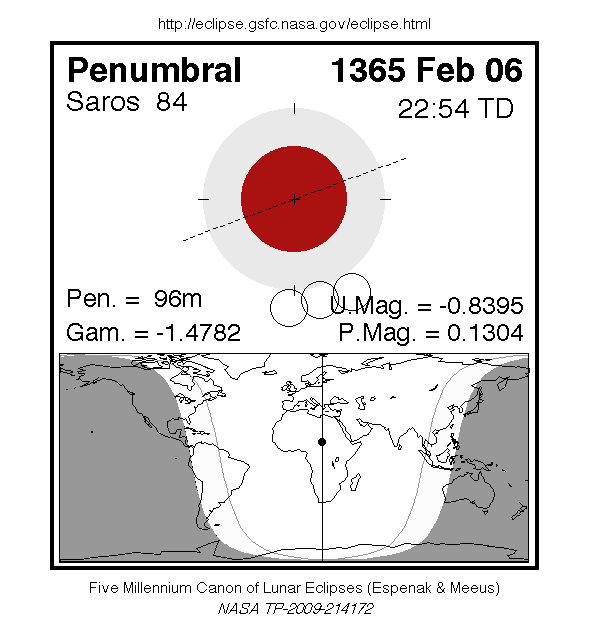
| 1365-02-00-Apulia | February 1365 JL | A lunar eclipse on 8th of February (actually 6th) predicts cold and wind; almost all people fall ill with fever and cough, affects wide regions like Apulia, Bologna, Marche, Tuscia and Lombardy | Ancora, adì 8 de febraro, la nocte vegnando, la luna divenne tucta sanguinea per assai volte, et ancho si mostrò schura, zoè negra; et durò per spazio d'uno quarto d'una ora o più. Et per questo accidente, a quisti dì, si fu uno fiero et forte tempo, cum grandi venti et grande zelo: et si fu una sì fiera pestilenza de fredo nelle persone de' christiani, cum grande febre et tosse et male assai; et si n'è stadi de morti alchuna parte per questa malatia, et si se pò dire che non rimase nessuno, generalmente, che non sentisse la malatia. Et questo fu per tucte le parte, zoè in la Puglia et in la Marcha, in Thoscana, in Romagna, in Lombardia, et generalmente per tucto; et questo comminzò de febraro et durò di fine al mese marzo, che fu chossì grande et forte tempo et grande malatia | Again, on 8 February, when the night was coming, the moon became completely bloody for many times, and it also became dark, that is, black; and it lasted for a quarter of an hour or more. And for this reason, on this day, there was a fierce and strong weather, with great winds and great zeal: and there was such a fierce plague of cold in the people of the Christians, with great fever and coughing and much evil; and there were many deaths from this disease, and it can be said that there was no one left, in general, who did not feel the sickness. [...] | Template:Anonymus 1938b, p. 211 | None |
| 1365-07-00-Romagna | July 1365 JL | Plague outbreak in the Romagna, very close to Bologna | Ancora fu una grande mortaligha per tucta la Romagna, et quasi poca gente gli rimase; inperò che per l'altre morìe che erano state, tanti gli ne morì, che mo pochi n'è romasi; et anche uno pocho da parte ne tochò in Bologna. Tucta fu de la malizia usata | Again, there was a great death in the whole of Romagna, and almost few people were left; however, because of the other deaths that had taken place, so many died, that there are now only a few Romans; and even a few died in Bologna. All of them were of the malice used | Anonymus 1938b, p. 200 | Translation by DeepL |
| 1367-00-00-Bologna | 1367 JL | A wind of livanto throughout Italy that made almost all people sick and many old people died | 1367 questo ano se lio un vente de livanto per tutto il mono che fe amalar quasi tutte le persone et di vecchi ne mori assai | The year 1367 this year there was a wind of livanto throughout the country that made almost all the people sick and many old men died | Template:Brani di cronache bolognesi, p. 20r | Translation by Thomas Wozniak |
| 1374-00-00-Florence | 1374 JL | Many relatives from the author died of the plague in Florence and Arezzo. He was in the meantime in Bologna. | 37. Questa Orsa, figliuola di me Luca, cavalieri, come piacque a Dio, al tempo della grande pistolenza, passò di questa vita, in Arezzo; ed è sepulta al luogo di frati Minori. E qui in Firenze morì a casa nostra Giancristofano suo marito, a dì .. Di luglio MCCCLXXIIII. […] 39. Nel MCCCLXXIIII, a dì 4 d'agosto, al tempo della grande pistolenza, s'ammalò la sopradetta madonna Felice, in Firenze ed era gravida di otto mesi; ebbe due gavoccioli, cioè da ogni lato, tralla coscia e'l corpo, uno; e fu sopellita colla creatura in corpo, in San Niccolò, in Firenze; e visse forse cinquantadue ore: Iddio la faccia verace perdono; e fu discreta e valente donna. […] Morì l'Orsa mia figliuola in Arezo, e Giancristofano suo marito, e cugino carnale di madonna Felice, venne d'Arezzo chioccio; e come fu stato in casa mia a Firenze tre dÌ, s'ammalò di questi gavocci; e forse cinquanto ore visse; e infra dieci dì la detta madonna Felice morì. Io era in Bologna, quando ebbi queste dolorose e spiacevoli e fortunevoli novelle; ed era a provvisione di Santa Chiesa, [p. 73] con isventure assai senza queste, di ch'io avea e oe turbazione, quanto cavaliere di Toscano: Iodato Iddio sempre. 40. Giovanni mio figliuolo, con quelle più onore che si potea, fece sopellire Giancristofano, in Firenze, al luogo di San Francesco; e nella malattia e nella sepultura si spese assai danari di nostri. Iddio faccia loro misercordia perpetuale per la sua gran benignità. Di .. di luglio 1374. | 7. This Orsa, daughter of me Luca, knight, as it pleased God, at the time of the great pistolence, passed from this life, in Arezzo; and is buried at the place of the Friars Minor. And here in Florence her husband Giancristofano died at our house, on dì.. of July 1374. [...]
39. In the year 1374, on the 4th of August, during the time of the great plague, the aforementioned lady Felice, who was eight months pregnant, fell ill in Florence. She developed two swellings (gavoccioli), one on each side between her thigh and body. She was buried in San Niccolò in Florence with the child still in her womb and lived for perhaps fifty-two hours. May God grant her true forgiveness; she was a wise and worthy woman. [...] My daughter Orsa died in Arezzo, and Giancristofano, her husband and a close cousin of lady Felice, came from Arezzo in mourning. After spending three days in my house in Florence, he fell ill with these swellings and lived perhaps fifty hours; within ten days, the said lady Felice also died. I was in Bologna when I received these sorrowful and distressing news. I was there in the service of the Holy Church, with many misfortunes already weighing on me besides these, as any knight of Tuscany would feel. May God always be praised. 40. Giovanni my son, with as much honour as he could, had Giancristofano buried in the place of San Francesco in Florence; and in his illness and burial he spent a great deal of our money. God grant them perpetual mercy for his great kindness. Of .. of July 1374. | Luca di Totto da Panzano: Libro di ricordanze 1861, pp. 72-73 | Translation by ChatGPT-3.5; Translation by DeepL; |
| 1374-00-00-Florence 001 | 1374 JL | The family of Giovanni and of Pagolo fled from the mortality of 1374 to Bologna. They lived there together in a house and shared the expenses. | E frall’altre si vide di lui questo: che pe·lla mortalità del 1374 , sendo fuggiti a Bolongnia tutta / (c. 44v) la famiglia rimasa di Giovanni e tutta la famiglia di Pagholo, insieme inn una chasa abitanti e a una ispesa chonchorenti a chomune, chome che chon vantaggio grande per que’ di Giovanni, nondimeno, tornando a quello ch’i’ vo’ dire, noi savamo chontinui tra uomini, donne, fanciulli e balie e fanti forestieri e chonpangnioni più di venti in famiglia. […] | And among other things, this was shown in his case: during the plague of 1374, when the remaining family of Giovanni and the entire family of Pagholo had fled to Bologna, they lived together in one house and shared the expenses, although there was great advantage for those of Giovanni. Nevertheless, to come back to what I wanted to say, we knew that they totalled more than twenty people in the family, including men, women, children, wet nurses and foreign servants and companions. | Giovanni di Pagolo Morelli: Ricordi 2019, p. 197 | Translation by ChatGPT-3.5; Translation by DeepL; |
| 1374-00-00-Florence 002 | 1374 JL | Great plague in Florence and the family of Pagholo fled to Bologna. | Negli anni Domini 1374 fu nella città di Firenze pestilenza † e grande; e chome dinanzi faciemmo memoria, Pagholo rendé l’anima a Dio in quest’anno, e noi fuggimmo a Bolongnia tutti, chome è scritto. | In the year 1374 was a plague in the city of Florence and great; and as we have already mentioned, in that year Pagholo gave his soul back to God, and we all fled to Bologna, as it was written. | Giovanni di Pagolo Morelli: Ricordi 2019, p. 236. | Translation by Moritz Uebelhack |
| 1382-00-00-Naples | 1382 JL | The army of the Duke of Anjous was defeated near to Naples. There and in many other places, like Ferrara, Bologna and Pisa was a high mortality. | Più, e più volte fu detto, che della gente del Duca d'Angiò, assai ne sono stati sconfitti, morti, e presi. Dicesi ch'è presso a Napoli a otto miglia, o così, e che ivi è mortalità di gente, ed hae grande caro di vettovaglia. In detto anno cominciò la mortalità in più luoghi, in Ferrara, in Bologna, in Pisa, ed in più altri luoghi. | It has been reported several times that many of the Duke of Anjou's men were defeated, killed and captured. It is said that he is near Naples, about eight miles away, and that there is a high mortality rate there and great scarcity of food. In that year the mortality began in many places, in Ferrara, in Bologna, in Pisa and in many other places. | Naddo de Montecatini: Memorie istoriche 1784, p. 61. | Translation by ChatGPT-3.5; Translation by DeepL; |
| 1390-00-00-Florence | 1390 JL | Mortality in Florence and people flee to Bologna | Chome messer Beltotto inghilese fue fatto nostro chapitano contro a' sanesi, e chome fu morìa […]La morìa è chominciata i Firenze e per lo chontado, e moionciene ogni in dì da XX a XXX. Molti cittadini si sono partiti e partono e fughono la mortalità a Bolognia. […] | How Messer Beltotto, an Englishman, became our Captain against the Sienese and how he died. The mortality began in Florence and its surrounding areas, every day there died 20 to 30 people. Many citizens had already left and still flee from the mortality to Bologna. | Anonymus:Alle Bocche della piazza 1986, p. 97 | Translation by Moritz Uebelhack |
| 1400-00-00-Florence 002 | 1400 JL | Great mortality in Florence with more than 20 thousand deaths. In summer the mortality came also to Volterra. The majority of the Florentines fled to Bologna and there arose a conspiracy against the government. | Fu in Firenze quest’anno mortalità: morì circha di ventimila boche dentro nella terra, o più. Era Morello podestà di Massa; e cho·llui si stette Alberto e due de’ suoi fanciulli e la donna ed io per insino a dì 7 di giungnio. E di poi andai a Volterra e stetti là 40 dì: vennevi la Chaterina. Di poi vi chominciò la mortalità e tornammo a Settimello, dove era suta grande e ristata ben d’u·mese; e ivi istemmo insino a Ongnisanti, sani, lodato Idi<o>. Morì a Morello due fanciulle, e a mme uno: Idio li benedica! […] In questa mortalità si fuggì pe·lla maggiore parte de’ fiorentini a Bolongnia, e ivi si criò un trattato, il quale venia chontro a molti grandi cittadini de·rregimento | There was mortality in Florence that year: about twenty thousand people died in the city, or more. Morello was podestà of Massa; and Alberto and two of his children and the wife and I stayed with him until June 7. Then I went to Volterra and stayed there for 40 days: Caterina came there. Then mortality set in and we returned to Settimello, where it was hard for a month; and there we stayed until All Saints' Day, healthy, praise be to God. Two of Morello's children died, and one of mine: God bless them! [...] During this mortality the greater part of the Florentines fled to Bologna, and there arose a conspiracy directed against many great citizens of the government. | Giovanni di Pagolo Morelli: Ricordi 2019, p. 250 | Translation by ChatGPT-3.5; Translation by DeepL; |
| 1400-00-00-Florence 003 | 1400 JL | Great mortality in Florence and in almost entire Italy. One third of the living people died in the region of Florence and many fled, especially to Bologna and Arezzo | Morìa del 1400 Fu in questa state in Firenze, e ancora quasi per tutta Italia una grandissima morìa; e tiensi, e così si fece conto, che nella nostra città di Firenze e nel suo contado, morisse sottosopra il terzo di quelli ch'erano vivi; fuggirono i cittadini il forte a Bologna e a Arezzo e in altri luoghi. | Dying in 1400 In this summer (1400) was in Florence and in almost entire Italy a great death; it is assumed and so it is estimated, that in the city Florence and surroundings died approximately one third of the living; the citizens fled strongly to Bologna, Arezzo and other places. | Filippo di Cino Rinuccini: Ricordi storici 1840, p. XLIV | Translation by Moritz Uebelhack |
| 1400-00-00-Florence 004 | 1400 JL | The plague raged in Florence from the beginning of the year, but mainly in summer. 30 thousand people died and many fled, especially to Bologna. | Pestis signa quaedam ab initio huius anni terrere homines incoeperant, quae mox per aestatem plurimum desaevivit cum incredibili strage cuiusque sexus atque aetatis. Unicum eius mali remedium in fuga repertum est. Fugerunt itaque cives populariter, Bononiam plurimi demigrantes; et tamen in vacua desertaque urbe supra triginta hominum millia pestis absumpsit. | Certain signs of the plague had begun to terrify people from the beginning of this year, and it was soon raging throughout the summer, with unbelievable slaughter of persons of every age and both sexes. The only remedy for this evil was flight. Citizens fled in a body, most going to Bologna, yet even in the empty and deserted city the plague consumed more than 30,000 people. | Leonardo Bruni: Historiarum Florentini populi libri XII, Vol. 3, p. 256. | None |
| 1400-00-00-Florence 005 | 1400 JL | Buonaccorso Pitti left his family in Sorbigliano, where they searched for safety from the plague which was raging in Florence. Pitti went to Bologna and got his family to join him. They rented a palace and they stayed there for four months. In Bologna a conspiracy arose against the government. | [72] […] Il perché diliberai tornarmi indietro e volentieri, perché malvolentieri, con gran dispiacere, avevo lasciati i miei fratelli e nostre famiglie a Sorbigliano, per cagione della mortalità che era a Firenze. Tornai a Bologna, e scrissi a' miei fratellli che ne venissono con tutte le nostre famiglie a Bologna, e mandai loro cavalli e mulattieri. Vennono in Bologna, e stati circa d'otto dì, tolsi a fitto il palagio e giardino de'Bianchi, di fuori di Bologna circa 2 miglia, e quivi temmo tutti noi fratelli e nostre famiglie, eccetto Piero e sua famiglia, che si rimasono a Montughi. Per la grazia di Dio ci salvammo tutti, eccetto che d'uno figliuolo che mi nacque là, il quale si morì. Trovammoci tra di noi e nostre famiglie e di nostri parenti, che là tornarono con noi a nostre spese, continovo circa 25 persone. Stemmo là circa quatro mesi, e trovammoci avere spesi, riposti a Firenze, fiorini 480 nuovi. E nel detto anno essendo molti Fiorentini fuggiti a Bologna, gl'usciti di Firenze sommossono molti giovani a trattare contro il nostro reggimento; e funne capo Salvestro di messer Rosso de'Ricci. Scopersesi il trattato a Firenze, perché lo rivelò Salvestro di messer Filippo Cavicciuoli; e fu preso Samminiato d'Ugucciozo de'Ricci e fugli tagliata la testa e a uno de'Davizi, e dato bando a molti e a molti perdonato, e chetossi la città. | I resolved to turn back and was not sorry to do so, for it was with the greatest reluctance that I had left my brothers and their families in Sorbigliano, where they had taken refuge from the plague then raging in Florence.
I went to Bologna and from there dispatched horses and muleteers with letters to my brothers telling them to join me with our families. They came and, about a week after their arrival, I rented the Bianchi family palace and gardens about a mile outside Bologna and installed my brothers and their families there, with the exception of Piero who stayed with his family in Montughi. By God's grace we were all safe and sound but for a son who was born to me there and died. Between ourselves, our immediate families and other relatives who came for visits, there were never less than twenty-five people staying in the house. We spent about four months there and our expenses by the time we got back to Florence amounted to 480 florins. That year, while many citizens were away in Bologna for fear of the plague, the political exiles seized the opportunity to foment a conspiracy against our governmental among some young men captained by Salvestro di Messer Rosso de'Ricci. The plotters were betrayed by Salvestro di Messer Filippo (p. 65) Cavicciuli. Samminiato d'Ugucciozo de' Ricci and a member of the Davizi family were sent to the block. Many were exiled; many more were pardoned and calm returned to the city. | Buonaccorso Pitti: Ricordi 1986, p. 43. | None |
| 1400-00-00-Florence 006 | 1400 JL | Great mortality in Florence and the only remedy was the migration. Many of them went to Bologna. | Iam millesimus quadringentesimus erat annus et pestis signa quaedam terrere inceperant, quae paulo post Florentiae desaeviit cum incredibili strage cuiusque sexus atque aetatis. Unicum eius mali remedium in fuga repertum est. Fugerunt itaque cives populariter, Bononiam plurimi demigrantes; et tamen in vacua desertaque urbe supra triginta hominum millia pestis absumpsit. | We were now in the year 1400. The plague had begun to manifest itself with frightening effect and before long it was raging in Florence and inflicting appalling mortality on people of both sexes and all ages. The only way of escaping this evil was found to be in flight. So the townspeople fled from the city in droves and many of them went to Bologna. | Leonardo Bruni: Historiarum Florentini populi libri XII, Vol. 3, p. 322. | None |
| 1400-04-00-Florence | April 1400 JL | A terrible plague came to Florence and many people died; in June there were more than 200 corpses a day. The citizens fled to the countryside and Bologna and Arezzo after the feast of Johan Baptist (24 June), but many people died there too. In other cities such as Rome, Naples, Pisa or Lucca, the mortality rate was just as high. In Florence, they had to reorganise because so many people had left. | Capitolo IV. — Come grande mortalità fu in Firenze e altrove questo anno. In questo anno fu in Firenze grande mortalità e cominciò del mese d'aprile, come che prima s'era veduti segnali pestilenziosi assai; però che quelli che morivano, tutti aveano aposteme velenose e pestilenziose, e grande paura n'aveano i cittadini. Poi seguitò di maggiore malizia, però che ne moriano per di cento, tutti d'aposteme; e poi di giugno seguitò maggiore però che erano per di nella città dugento corpi e' più; e poi di luglio molto maggiore, e durò insino a settembre troppo grande nella città; e ancora nel contado di Firenze fu maggiore che nella città, però che in molti popoli morirono la metà delle persone che v'erano e in alquanti molti più che la metà; e molti cittadini ch'erano fuggiti in contado morirono; e fu questo grande numero; e molte castella rimasono mezzo vòte e molte famiglie disfece. E come fu fatta la festa di santo Giovanni, grande numero di buoni cittadini si fuggirono fuori della città e andaronne colle loro famiglie nel contado di Firenze in più ville e castella; e ancora n'andarono assai a Bologna, e molti ve ne moriro nondimeno; e chi andò ad Arezzo e anche assai ve ne morí; e cosí dove n'andarono ne morí in ogni luogo che fu in tutte le terre di Toscana. Era ancora la detta mortalità nel detto tempo grandissima a Roma, che fu tal di che volle settecento o ottocento corpi morti; ma la maggior parte romei ; e ancora fu la detta mortalità in molte terre d'Italia in questo tempo, dove grande e dove minore, però che allora n'era dove a Pisa, a Lucca, a Perugia e a Napoli e in tutto il paese; e ancora era in Lombardia dove grande e dove grandissima in molte città la detta mortalità. Li Fiorentini, veggendo la città vòta di buoni e ricchi cittadini, diliberarono di soldare insino in secento provigianati a guardia de la città e infino in settecento e cinquanta lance di soldati tra per di fuori e per dentro, e cosí feciono ; e aveano allora al soldo mille trecento soldati di fanti. E cosi perché li cittadini s'erano partiti, fu ordinata la città e 'l contado e distretto loro. | Chapter IV - On the great mortality in Florence and elsewhere this year. This year there (1400)was a great mortality in Florence, which began in the month of April, although numerous plague-like signs were already visible beforehand. For the deceased all had poisonous and pestilential boils, and the citizens were greatly afraid of them. Then a greater malice followed, for a hundred people died every day, all from boils. And then in June it increased so that there were two hundred or more corpses a day in the city. And then in July it was even worse and continued on a very large scale in the city until September. It was also worse in the countryside around Florence than in the city, because in many villages half the population died and in some even more than half; many citizens who had fled to the countryside also died. It was a large number, and many places were left half empty, and many families were destroyed. After the feast of St John had been celebrated, many good citizens fled the city and went with their families to various villages and castles on the countryside surrounding Florence. Many also went to Bologna, and many died there anyway; some went to Arezzo, and many died there too. Wherever they went, people died everywhere in all areas of Tuscany. At that time, mortality was also very high in Rome, and there were days when there were seven hundred or eight hundred deaths, but most of them were Romans. Mortality was also high in many other Italian cities at this time, sometimes more, sometimes less, for example in Pisa, Lucca, Perugia and Naples, as well as throughout the country. In Lombardy, too, mortality was high to very high in many cities. The Florentines, seeing that the city was emptied of good and rich citizens, decided to pay up to six hundred guards for the defence of the city and up to seven hundred and fifty lances of soldiers both inside and outside, and so they did.They had a thousand and three hundred foot soldiers in their pay at the time. So the city and its environs and district were organised because the citizens had left. | Anonymus: Cronica volgare 1915, p. 250. | Translation by ChatGPT-3.5; Translation by DeepL; |
| 1462-02-00-Bologna | February 1462 JL | A flu-like epidemic in Bologna kills mainly the elderly | Del mese di febbraro per il gran freddo si scuoprono strane infirmitá et regnano molte febbri et catarri, di che molti vecchi moiono nella città che nel territorio. | In the month of February because of the severe cold one saw strange diseases and fevers and colds ravaged, which killed many elderly people in the city and the countryside. | Ghirardacci 1915-16, p. 178 | Translation by Martin Bauch |
| 1464-00-00-Bologna | 1464 JL | Very stormy and rainy year, the sun shone little in September as the moon was blue at night. There was severe fever, smallpox and seasickness | A dì 17 di dicembre, il lunedì, venne in Bologna gran neve. […] In somma quest’anno fu piovoso et tempestoso e nel tempo del raccolto vendevasi la corba del grano lire due, la spelta soldi 11, la fava soldi 20; fu dell’ uva assai. Il mese di settembre fu con molte maligne nebbie; il solo splendeva poco et era di color smorticcio, siccome è di notte la luna, che si mostrava azzura. Furono gran febbri, vaioli et mali di costa. | Ghirardacci 1915-16, p. 187 | Translation needed | |
| 1465-00-00-Bologna | 1465 JL | In Bologna: June very humid; from July to 19 September very dry and great wheat shortage, then on 20 September a solar eclipse, then cold and in December again very warm, from 23 December snow and wind and mild and short plague | Alli 20 di settembre, il venerdì, a hore 23, fu la ecclisse del sole et fu grande carestia di frumento, perciochè la corba valse lire due et soldi 16; fu anco poco vino […] In somma questo anno per tutto il mese di giugno fu humido et tempestoso, et per questu fu si gran freddo, che gli huomini furono forzati di amicarsi il foco. Fu assai frumento e legume, ma poco vino. IL mese di luglio, di agosto et di settembre furono secchi et caldi insino alli 19 di settembre et da indi in poi il freddo se fece della statione padrone dandoci pioggia et nebbia. Il mese di dicembre fu talmente calido, che pareva esser la primavera, et così stette insino alle 23 e poi ne diede neve et venta et una leggiera et breve pestilenza et mal di punta. | On Friday the 20th of September, at 11 p.m., there was an eclipse of the sun and a great shortage of wheat, because the grain was worth two lire and 16 cents; there was also little wine [...] In sum, this year, for the whole month of June, it was humid and stormy, and for this reason it was so cold, that men were forced to love the fire. There was much wheat and legumes, but little wine. The months of July, August and September were dry and hot until the 19th of September, and from then on, the cold became the master of the weather, giving us rain and fog. The month of December was so hot, that it seemed to be spring, and so it remained until 23rd and then it gave snow and wind and a slight and brief plague and sore tip. | Ghirardacci 1915-16, p. 189. | Translation by Thomas Wozniak |
| 1465-00-00-Bologna 001 | 1465 JL | People suffered from fever and chest pain in autumn, but warmer weather in November and December eased their symptoms | Nota che in questo anno morino alquanti homini de mala fama, zoè che prestavano a usura, et faceano honestamente li mal contracti, chè prestavano da 25 insino in 40 per cento, facendo depositarie de datii cum littere de cambio et altri mal contracti coperti. Molto febre, varoli, mal de coste fu in l’otonno; le somente bone; novenbre et desenbre bom tempo, che ‘l fece utile assai alla povera gente, et molto più alli dazieri delle porte. | Corpus chronicorum bononiensium 4, p. 341 | Translation needed |